Developing cognitive connections is important for any professional position. Continual improvement of the integration of logic and reasoning and improving focused attention and memory through reading and writing or auditory and visual processing is critical to professional development.
These skills can be acquired in one’s personal life and incorporated into their professional work through cognitive transfer, or cross-domain learning. For example, reading can provide you with examples of how to deduce and problem-solve, which can then be applied to solving the problems related to the project you are working on.
This area has always been of interest to me. In college, the traditional Major-Minor or double Major didn’t appeal to me, but the University of Arizona had an Interdisciplinary Studies program.
I applied and was accepted. My proposal was to take courses in political science, history, and philosophy with the goal of studying terrorism, revolution, and democracy building using Russia/Soviet Union and the Middle East’s history and current climates to anticipate outcomes and devise policy approaches to foster democracy within ethical and morally acceptable parameters.
Today, I focus on the works of J.R.R. Tolkien to explore concepts such as fate vs. free will, the nature of good vs. evil, etc.
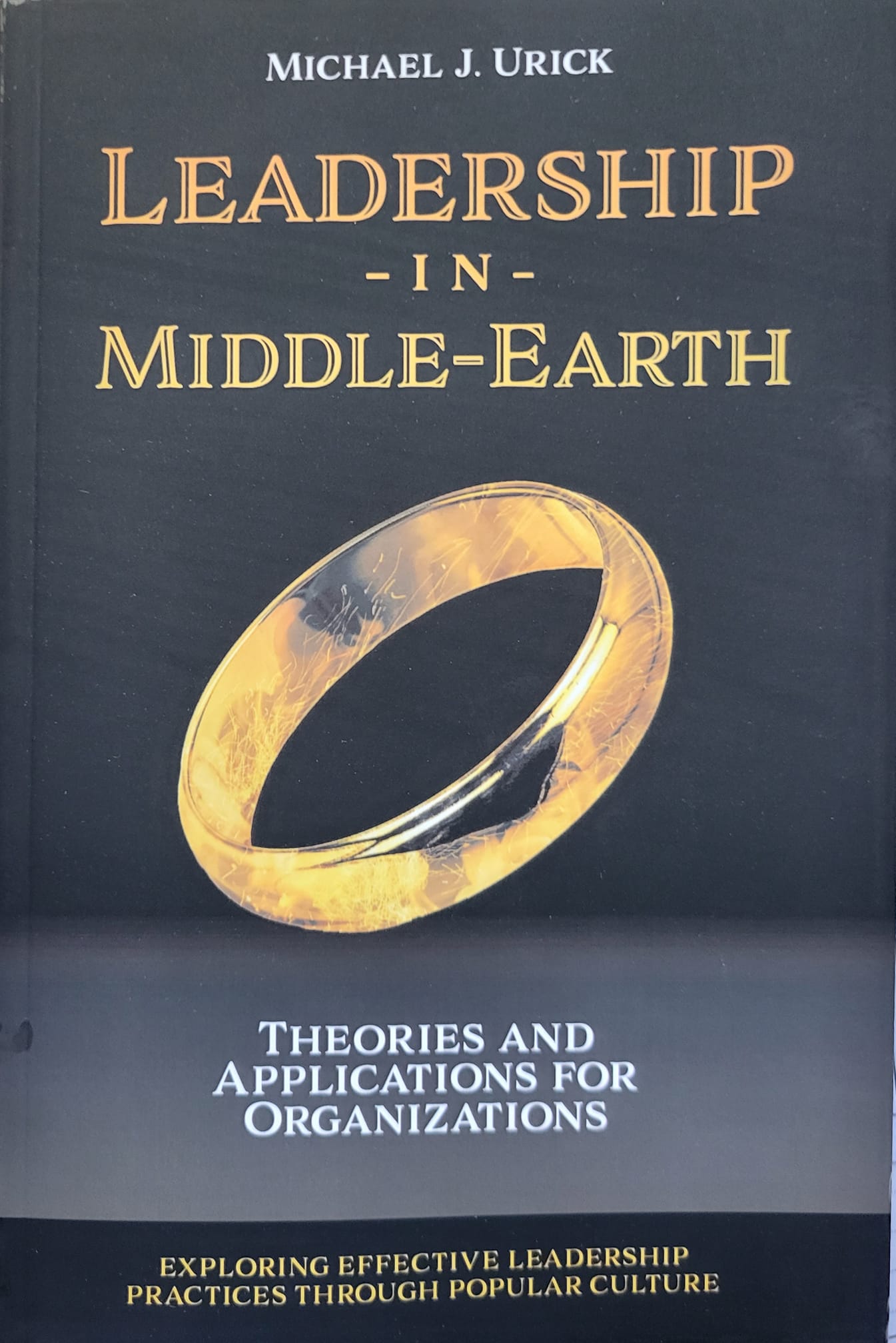
I read, write, discuss, and present on topics and themes from his work. Since 2021, my presentations have been accepted at Oxonmoot, the Annual Conference of the Tolkien Society. In 2022, Michael Urick and I presented as the first ever co-presenters with one on-site and the other remote at the event. He even included me in the author acknowledgements of his book.
What People are Saying:
“A great presentation by Michael Urick and Ross Nunamaker presenting lessons learned from the poor decisions of Turin, Thorin, Theoden & Denethor.”
Jude and Stef, hosts, The Athrabeth Podcast
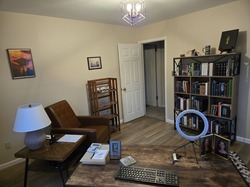
I’ve even converted a room in my house into a space dedicated to this endeavor. I have over fifty books by or about J.R.R. Tolkien, along with signed artwork, a desk to work at, and a recliner to enjoy reading and taking notes.
I am convinced that having this as a focus area of my personal well-being has helped me tremendously in my professional work. Using non-work topics, gives me a ‘break’ while I continue to learn and am later able to apply it to my work.
 Resilient Seeker Coaching | Ross Raymond Nunamaker