For my Recap number six I chose to address three sessions that one might consider ‘meaningful’ beyond the stories themselves. This could be applied to many topics as so many presenters help make Tolkien’s stories more accessible and relatable through connections one might not have previously considered, but these stood out to me this year.
In “Gandalf, Artificial Intelligence, and Leadership: Implications from: Magnifica Humanitas” Justin Petrovich and Michael Urick both of Saint Vincent College addressed the references Pope Leo made to Tolkien’s work in his first Encyclical.
You can read the Encyclical here.
They presented Tolkien’s leadership through the lens of his Catholic background and how it related to the Pope’s statements. In doing so they addressed Catholic Social Thought and the environment as well as Gandalf’s role as messenger and leader, particularly his doing the small things in order for big things to be able to occur.
In 2022, Michael and I co-presented an Oxonmoot session “Lessons to Be Learned from Bad Decisions: Turin, Thorin, Theoden, and Denethor.”
It was the first, and maybe only time a presentation was made with one person, not me, in Oxford and the other, me, online. One day I’ll get there.
Michael also has a book Leadership in Middle-earth, which teaches leadership principles through the actions of Tolkien’s characters. It is part of a series he is the editor of on leadership and business presented through pop culture.
Nils Ivar Agoy presented “Literary Preparedness in an insecure age.”
Norway’s digital literacy in schools is long standing and deeply integrated in its curricula. I learned about their early and more recent efforts as AI emerged last year so this session was a great way for me to see how a forward thinking culture shapes one’s thinking on the topic.
Prof. Agoy is a professor of history at the University of South-Eastern Norway. He explored the questions, and I paraphrase, ‘has social media reduced our ability for concentration and deep reading?’ And ‘Can reading Tolkien help?’
He addressed on Faierie Stories for the most part in drawing his conclusions. The topics of escape vs flight, the idea that one does not deny reality, but sees it with fresh eyes, and how escape is related to recovery were addressed.
So too were consolation, eucatastrophe, the artist and the sub creator.
Finally moral principles were discussed and he noted how Tolkien’s work has long been affiliated with the hippie movement and has become increasingly linked to the extreme right, how has this happened and why?
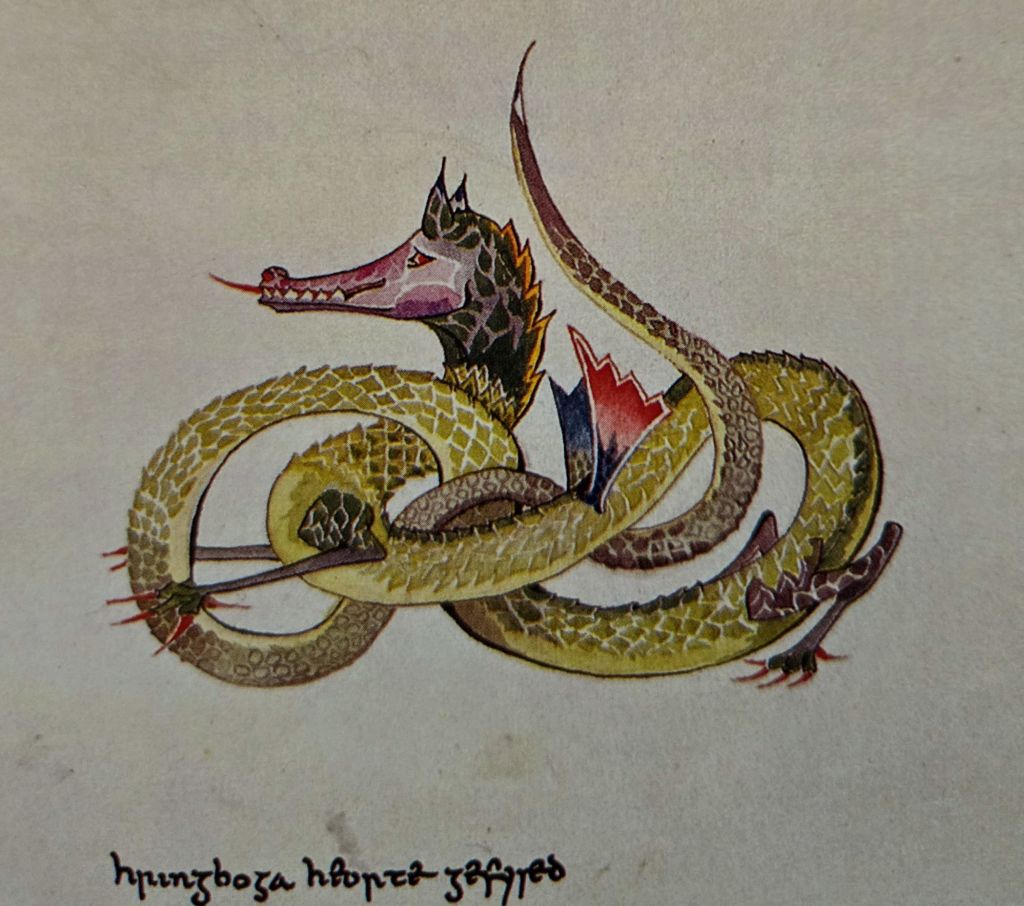
Tolkien believed in giving power to the unwilling, he noted dragon sickness as the epitome of greed, and that at its core was a Christian message, the Encyclical being further proof.
He concluded with:
Conclusion rediscover fundamental truths (and paraphrasing):
- His works allow us to not escape, but to:
- Rediscover fundamental truths about the human condition,
- Continually adopt and maintain a critical attitude,
- Recognize the absolute ethical norms that exist,
- Remind us that there are no easy answers to moral questions, and
- There is no hiding in crowds.
Each Oxonmoot conference concludes with Enyalie at Wolvercote Cemetery, where a reading is made at the burial place of J.R.R. and Edith.
This year Shaun Gunner, Chief Executive Officer of the Society read from the Children of Hurin. He began with Glaurung’s death to the Stone of the Hapless where Hurin and Morwen are reunited before her passing.
This reading was of particular interest to me, given my love of this particular story in the Legendarium.


Leave a comment